
Dental implants in Barcelona
Smile, eat and speak with complete confidence again.
Dental implants replace missing teeth with a fixed, aesthetic and durable solution. We work with precise planning, respect biological healing times, and support you closely throughout the entire process.
Treated byDr. Víctor MéndezOral surgeon and specialist in implants

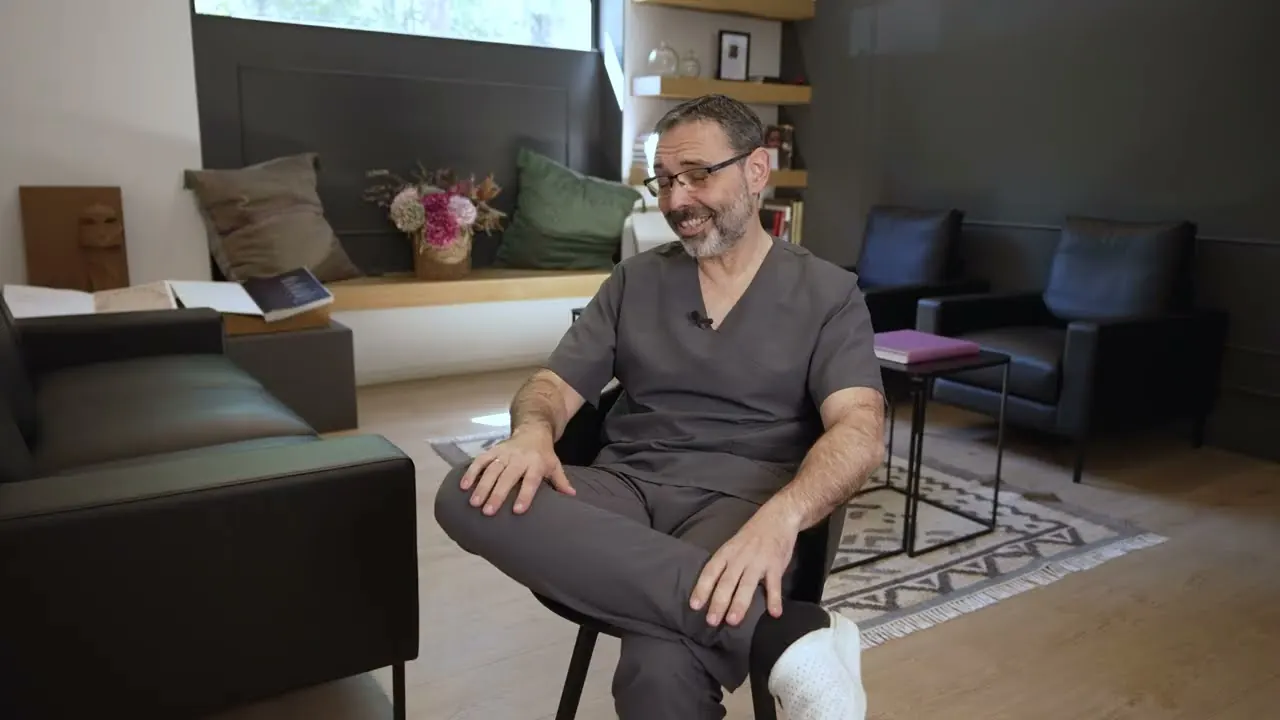
Restoring a tooth is about far more than aesthetics
Losing a tooth affects you more than you might imagine. Sometimes, you start avoiding smiling in photos. Other times, you stop chewing on one side, feel self-conscious when speaking, or notice that something has changed in your expression.
Over time, it can also affect your comfort when eating, the stability of other teeth, and even the bone.
An implant is not just about replacing a missing tooth: it is about restoring stability, function, and peace of mind to your day-to-day life.
What concerns our patients most
We know you may have questions, doubts, and perhaps a little apprehension. Breathe and smile: you are in good hands. Take your time, read through comfortably, and if you cannot find what you are looking for, simply get in touch.
Does getting an implant hurt?
It is one of the most common concerns. The implant is placed under local anaesthetic, so you will not feel any pain during the surgery. Over the first few days, there may be slight swelling or mild discomfort, as with other dental procedures. We will provide you with very clear recovery guidelines and monitor you closely after your procedure.
What are they made of?
Most are made of biocompatible titanium, a material widely used in medicine for its ability to integrate with the bone securely and stably. This integration is what allows the implant to function as an artificial tooth root.
Why do you have to wait before placing the crown?
After the implant is placed, the bone needs time to integrate with it: this is osseointegration. During this phase, the implant gradually fuses with the bone to form a firm, durable foundation for the permanent crown. Respecting this biological timeframe is essential for long-term stability.
Can an implant be rejected?
Implants have a very high success rate, but certain factors can hinder integration, such as smoking, healing issues, or specific medical conditions. This is why we perform a thorough initial diagnosis and careful follow-up. If an implant does not integrate, we evaluate the cause and recommend the best solution to restore the area safely.
How long does an implant last?
It can last for many years. It depends on your oral hygiene, lifestyle habits, the health of your gums, regular check-ups, and professional maintenance. Our goal is to help you keep it stable and healthy in the long term.
Do they require maintenance?
An implant requires care that is just as rigorous as, or even more so than, a natural tooth. Routine check-ups and professional cleanings are essential to monitor the surrounding tissues and prevent complications. We recommend a check-up every 6 months.
What exactly is a dental implant?
A small, biocompatible titanium structure that replaces the root of a missing tooth.
Once placed in the bone, it requires time to integrate and heal, becoming a stable, secure foundation. We then place a crown designed to look and function naturally.
The aim is not just for the implant to ‘fit’. It is for you to eat, smile and speak again with comfort and confidence.
Our approach to implantology
We believe your peace of mind is also part of your treatment. Every patient arrives with a different story, specific needs and, often, questions or uncertainties. That is why we do not simply place implants: we plan each case with precision and support you throughout the entire process. We prioritise:
- Individualised diagnoses
- Careful, minimally invasive surgery
- Respected healing times
- Functional and natural-looking results
- Long-term follow-up
The process, step by step
Assessment and planning
A comprehensive examination, radiographic assessment, and bone evaluation to design the most suitable treatment for you.
Implant placement
Carried out under local anaesthetic in a carefully planned procedure, ensuring precise, stable placement.
Osseointegration and healing
The implant integrates with the bone before the permanent crown is fitted. This phase typically takes several months.
Crown placement
We design a functional, stable, and aesthetic crown that blends naturally with the rest of your smile.
Check-ups and maintenance
Regular follow-up visits are key to maintaining the health of your implant and its stability over time.
Are there screwless or metal-free implants?
‘Screwless implants’ is a confusing term. It is often used to refer to more aesthetic treatments, systems where the fixing is not visible, or zirconia implants—a metal-free ceramic alternative.
Although there are different materials and types of restoration, most implants still require stable fixation to the bone to replace the root safely and durably.
The most suitable treatment depends on your bone, gums, bite and personal needs. Beyond the material, the key is an accurate diagnosis and a stable, safe long-term solution.
When might an implant be recommended?
Every case is assessed individually, but implants can be a great solution in situations such as:
- Loss of a single tooth
- Several missing teeth
- Difficulty chewing comfortably
- Unstable removable dentures
- Irreparable tooth fractures
- A need to restore your oral function and aesthetics
We also support you after surgery
Recovery is an important part of treatment. After placing the implant, we give you detailed guidelines to heal properly and reduce discomfort during the first few days: hygiene, diet, swelling, medication and post-operative follow-up.
We want you to know what to expect at each stage and to feel supported after the procedure as well.
Frequently asked questions about dental implants
We know you may have questions, doubts, and perhaps a little apprehension. Breathe and smile: you are in good hands. Take your time, read through comfortably, and if you cannot find what you are looking for, simply get in touch.
How long does an implant take to heal?
The gums usually heal within the first week; the integration of the implant into the bone can take several months.
Can I return to my normal routine afterwards?
For the first 24-48 hours, we recommend taking it easy, avoiding strenuous exercise and following your doctor's instructions.
Does smoking affect implants?
Yes. Smoking significantly increases the risk of healing complications and implant loss.
Do they feel like natural teeth?
When treatment is well planned and maintained, the sensation when speaking and chewing is very similar to that of a natural tooth.

Dental implants in Barcelona
Would you like to know if an implant is the best option for you?
Opening hours
- Monday
- 8:00–19:00
- Tuesday
- 8:00–20:00
- Wednesday
- 8:00–19:00
- Thursday
- 8:00–20:00
- Friday
- 8:00–19:00
- Saturday
- Closed
- Sunday
- Closed
Nearest car park (2 minutes)
Les Amèriques, Carrer de Santaló, 30